
Experiential Movement Therapy
I am. You are. + You are. We are.
Three movements, two Saturdays: How do you find your own center, hold onto it while connecting with another person, and then build genuine community without losing yourself? Designed for therapists and practitioners working with clients who feel disconnected, and for anyone doing their own work. The workshops are freestanding and progressive. CEUs available.
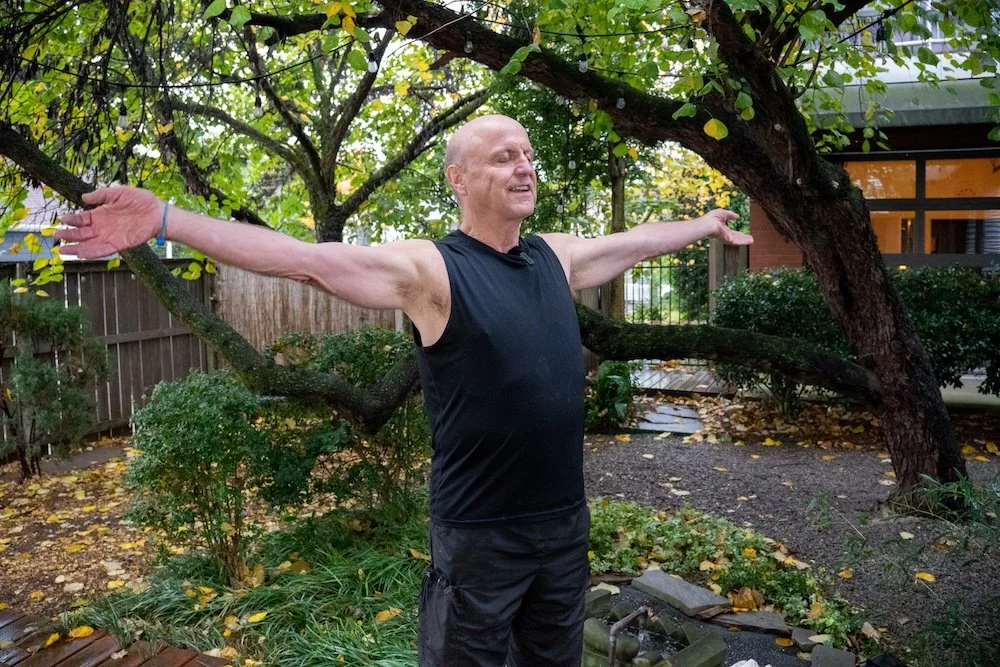
Meet Your Instructor: Andrew Krichels
Andrew Krichels holds a joint degree in Dance and Psychology from The Boston Conservatory and SUNY Purchase, and spent 25 years performing with a dozen dance companies while teaching on the faculties of Lincoln Center, the Leonard Bernstein Center, and The Grammy Foundation. Seeking relief from extreme dance injuries led him to advanced certifications in Pilates, Bowen Therapy, and Medical Qi Gong, followed by a seven-year training at The Estuary School of Healing Arts and Naropa University's Authentic Leadership Program, where he developed the workshops that became Experiential Movement Therapy. His core belief has stayed the same throughout: move the body and the mind will follow.
Guest Instructor: Wesley Knight, LCSW
These workshops draw on breath, qi gong, Chinese medicine, gentle movement, and the creative process—carefully built, accessible to all bodies, and genuinely joyful.I Am, You Are
Before you can be with anyone else, you have to be with yourself. This first workshop is about locating your own center and building a daily practice that actually keeps you there.
Research consistently shows daily practice makes recovery more sustainable, so we'll experiment with breath, gentle movement, qi gong, and simple creative exercises until you find what works for you.
From there we begin the second movement: how do you stay connected to another person without losing your own center? Accessible, suitable for all bodies, and importantly fun.
You Are, We Are
Community is the opposite of trauma. This second workshop briefly revisits the grounding work, goes deeper into relating to another person, then turns fully toward the question of community.
How do you belong to a group without disappearing into it? We don't march in step. We stay in our bodies, connect with one human being, then with many.
Using the creative process, the sessions are non-threatening, open, and often joyful. We'll build something visceral and real. Freestanding, but richer if you've done the first. Accessible to all bodies and experience levels.